What to Do After Your Car Breaks Down: A Step-by-Step Safety Guide
A breakdown is stressful, but a clear head and a few smart moves keep you safe until help arrives. Here's exactly what to do.
Get to safety first
The moment you sense trouble — a warning light, a loss of power, a strange noise — signal and move toward the right shoulder or the nearest exit as smoothly as you can. Aim for a flat, straight, well-lit spot with room to pull fully off the travel lanes. On a freeway, an off-ramp or a wide shoulder well away from moving traffic is far safer than stopping in a lane.
Make yourself visible
Turn on your hazard lights immediately, even before you've fully stopped. Once parked, if you have reflective triangles or flares and it's safe to place them, set them behind your vehicle to warn approaching drivers. At night, keep your interior dome light on so you're easier to see.
Decide whether to stay in the car
On a busy freeway, the safest place is often inside your vehicle with your seatbelt on, especially if you're on a narrow shoulder — exiting into live traffic is dangerous. If you're on a quiet street or in a parking lot and it's safe, you can wait outside and away from traffic. Trust your read of the situation.
Call for help
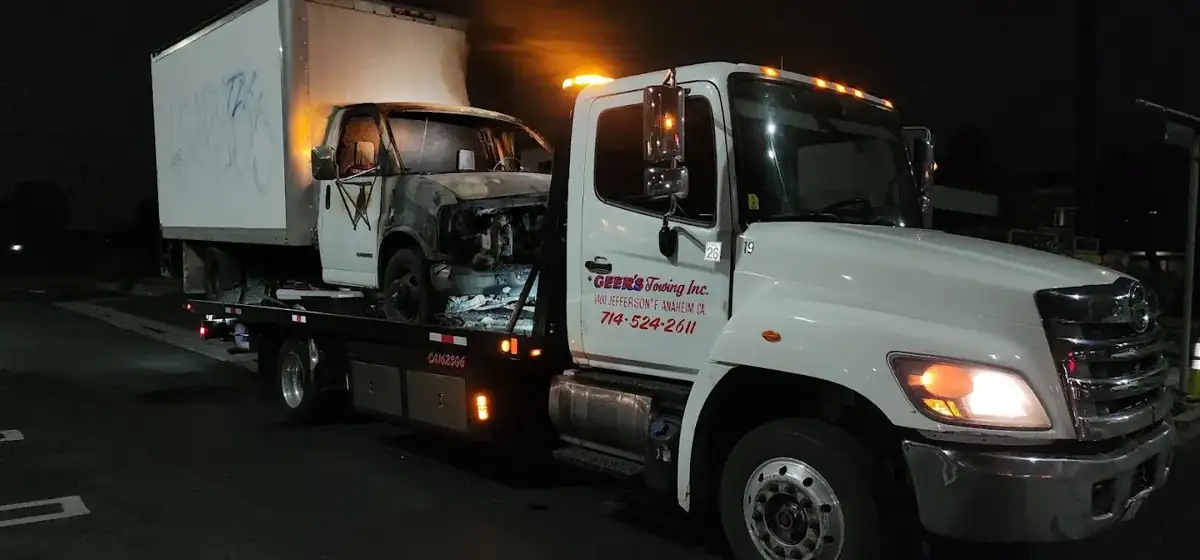
If anyone is hurt or the vehicle is in a dangerous position, call 911 first. Once you're safe, call a towing company you trust. When you reach Geer's Towing dispatch at (714) 524-2611, have your location, your destination, and your vehicle's year, make, and model ready — it helps us send the right truck the first time.
Let the professionals load it
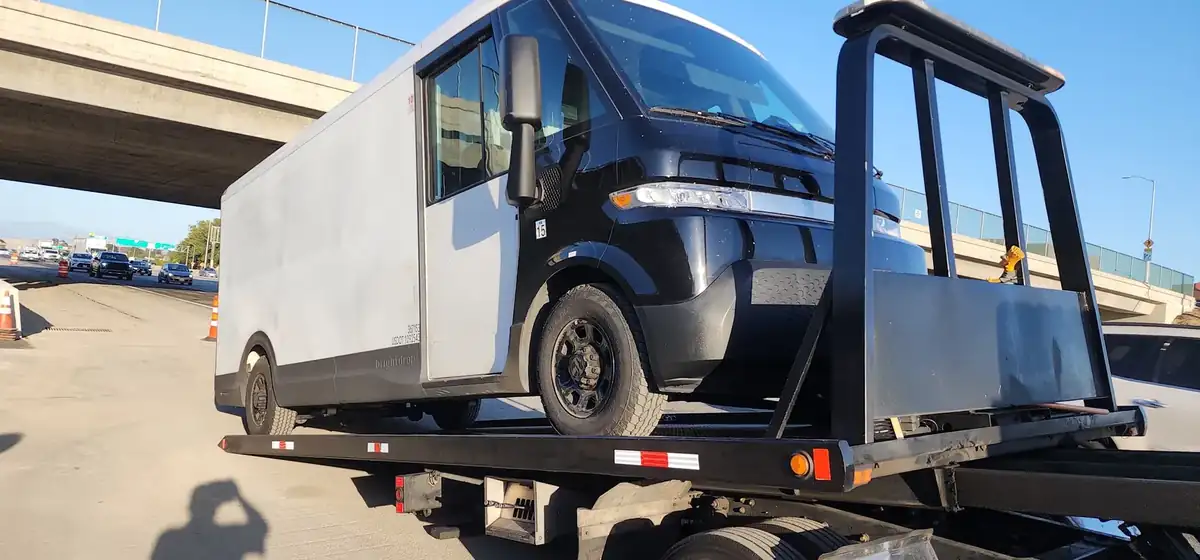
Modern vehicles — especially AWD, low-clearance, and electric cars — should be loaded onto a flatbed rather than dragged on their wheels. A trained operator will position and secure your vehicle to avoid any added damage. Resist the urge to push or move a disabled car yourself near traffic.
Put This Advice to Work — or Just Call Us
We're one call away across Orange County, day or night.